
🔹 Strategy That Evolves with the World
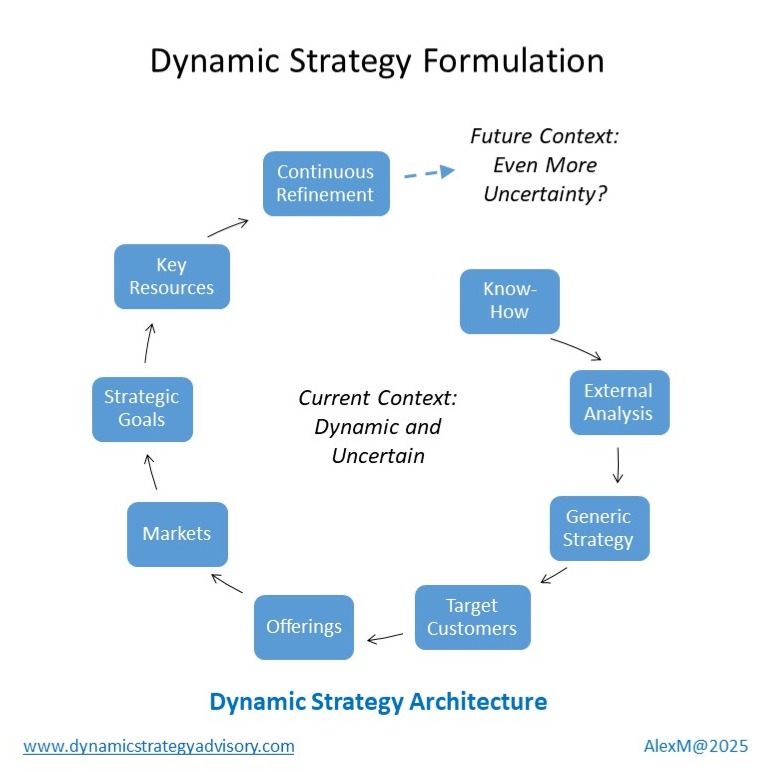
In a world of accelerating change, strategy must be more than a static plan – it must be a living process. The Dynamic Strategy Formulation Methodology introduces a structured, clear and logical nine-step approach that helps organizations craft adaptable, innovative strategies aligned with shifting realities.
This methodology is designed for leaders who must navigate complexity, seize emerging opportunities, and build resilient, future-ready organizations.
🧩 The 9-Step Strategy Formulation Process
Each step is anchored by essential questions that guide creative thinking and strategic clarity.
1. Know-How
Define your organization’s core strengths and unique expertise.
Key Questions:
- What is our know-how, and do we possess any competitive advantages?
- Are these advantages sustainable?
- How can we create value for both our customers and ourselves, including innovative value?
2. External Analysis
Understand the forces shaping your environment and uncover hidden opportunities.
Key Questions:
- What trends, forces, or disruptions are shaping the external environment?
- What opportunities can we proactively seize before competitors do?
- What risks or threats are emerging, and how can we prepare or respond?
- Are there adjacent or entirely new markets we can explore?
3. Generic Strategy
Choose your competitive approach to guide positioning and resource allocation.
Key Questions:
- What type of value will we deliver – and how will it stand out from competitors?
- Will we lead through cost efficiency, differentiation, niche focus, or a new strategic logic?
- How does this approach align with our capabilities and market dynamics?
4. Target Customers
Identify the customer segments that matter most.
Key Questions:
- Who are our most strategically relevant current and potential customer segments?
- What unmet needs or pain points do they face?
- How do our capabilities align with the needs of these segments?
5. Offerings
Define the products and services that deliver value.
Key Questions:
- What are we offering to our target segments, and how does this align with and reinforce our chosen generic strategy?
- How do our products and services align with identified customer needs?
- Are our offerings scalable, adaptable, or positioned for long-term relevance?
6. Markets
Select the most strategic locations for growth and value capture.
Key Questions:
- What geographic markets offer the best strategic fit for our offerings and target customers?
- What are the entry barriers and regulatory landscapes in these markets?
- What is the competitive intensity and growth potential within these markets?
- How can we tailor our approach to each selected market?
7. Strategic Goals
Set clear, measurable objectives to guide execution.
Key Questions:
- What specific and measurable goals will define our success?
- Are our goals achievable and do they accurately reflect the intent of our overall strategy?
8. Key Resources
Align the assets and capabilities needed to deliver your strategy.
Key Questions:
- What resources and capabilities are essential for delivering on our strategic goals?
- Which assets should we build, acquire, partner for, or divest?
- How do we ensure that our resources remain flexible, scalable, and aligned with evolving priorities?
9. Continuous Refinement
Build in feedback loops to keep your strategy relevant.
Key Questions:
- How will we continuously evaluate the performance and validity of our strategy?
- What mechanisms do we have in place for learning and rapid adjustment?
- How do we integrate new information, insights, or disruptions into our strategic process?
🔍 Why This Methodology Works
| Feature | Benefit |
| Integrative Thinking | Combines the best of Porter, Blue Ocean, VRIO, Playing to Win, and more into one flow. |
| Structured Clarity | Breaks complexity into nine logical, objective-driven steps. |
| Adaptability Built In | Encourages iteration and responsiveness at every stage. |
| Opportunity-Focused | Surfaces unmet needs and latent demand for first-mover advantage. |
| AI-Ready Architecture | Designed to integrate data, forecasts, and AI tools for smarter decisions. |
| Practical + Theoretical | Grounded in strategy theory, built for real-world execution. |
📖 Want to Explore the Full Article?
💡 Dive deeper into the thinking behind this methodology and how it can transform your strategic process.
🔗 Read the Full Article →
